
Dental Prosthetics
Marton Dental – Hungary
Mon-Fri:
08:00-18:00
Sat-Sun:
closed
H-9200 Mosonmagyaróvár Április St. 1
About crowns and bridges
Dental treatments in Hungary
After tooth loss, you are advised to get a replacement as soon as possible. It’s not just a question of vanity, failing to replace your missing tooth can have a severely negative impact. It disrupts your teeth’s order: the teeth next to the missing tooth may drift or dislodge, the ones in the opposite jaw may start growing into the gap, the mandibular joint’s strain may get higher, difficulty may occur with chewing and speaking. There are a number of ways to replace your missing teeth.
We recommend using a crown if one of your teeth is so damaged due to dental decay, trauma or abrasion that it couldn’t be managed with filling.
A bridge is intended to replace several teeth in a row. The teeth next to the gap act as supports, but the downside is that these teeth need to be abraded. It can be avoided if we fix the bridge on implants. The implants not just eliminate the need to abrade, but they shorten the gap, so the bridge will be statically more sound. If you missing only your last tooth in the row, it can be replaced only with implants.
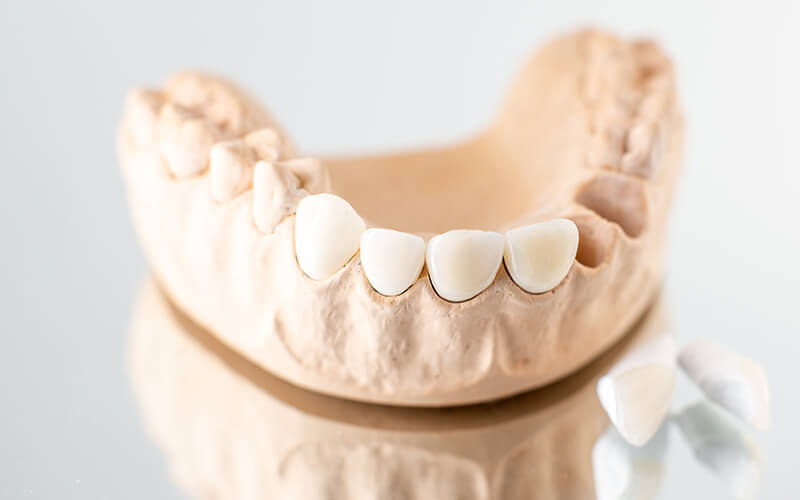
Zirconium crown
It can perfectly imitate the original tooth both in colour/shape and in quality, so the outcome is perfectly aesthetic and realistic. There is no chance of colouring between the crown and the gum. It’s practical too: functional, hardwearing and stable thanks to the CAD-CAM technology which is accurate to a micrometer.
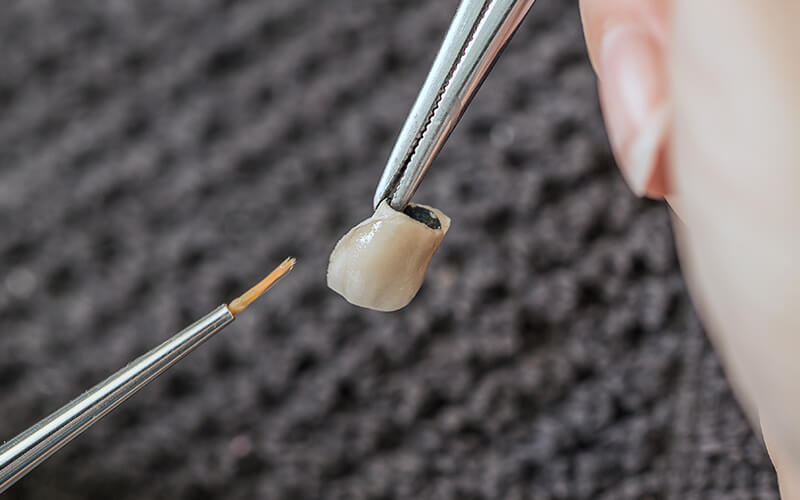
Metal ceramic crown
The colour of the porcelain is selected by the help of a tooth shade chart to completely match the colour of the original tooth. The metal ceramic crown is really long-lasting thanks to its bearing capacity. Compared to the zirconium crown, its price is more friendly, but it is not as aesthetic looking.
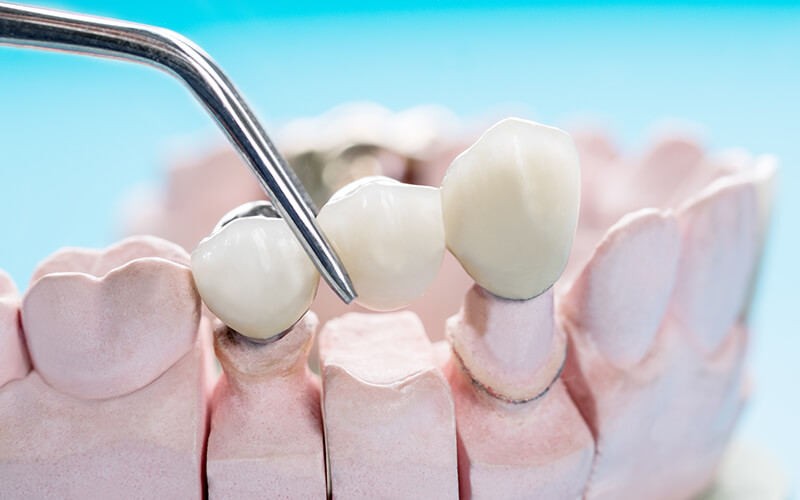
Zirconium bridge
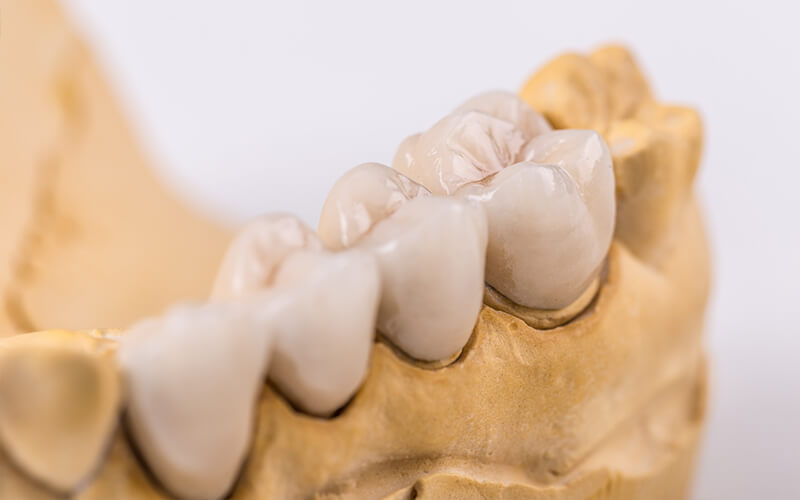
Metal ceramic bridge
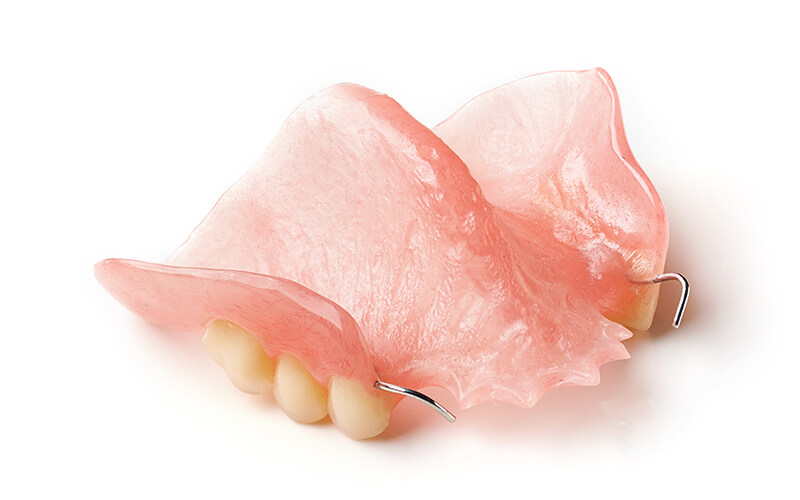
Removable partial denture
It combines fixed and moving parts, and its preparation counts as a relatively lengthy and complex procedure, but the outcome is aesthetic looking and dependable. The patient’s remaining teeth get a bridge to which the removable denture connects with clasps. The moving part’s stability is guaranteed by the precision attachment and the fixed part’s immovability. It ensures comfortable eating and natural appearance.

Removable complete denture
It leans on the mucous membrane; the facial muscles, the mucous membrane’s surface, the chewing pressure, the vacuum effect and gravity all collectively ensure that it stays in its place. It is made out of a special type of plastic combined with metal parts. The plastic needs to be kept wet, so it doesn’t crack and lose its form.
Advantages:
- restores the chewing ability
- corrects the facial features
- restores the natural dental arch
- protects the mandibular joint
- prevents dysarthria
- helps to avoid psychological disorders

Temporary prosthesis
It protects a tooth after it has been prepared for a crown or helps to preserve your confidence if the tooth loss affects the smile-zone. In urgent cases, a temporary replacement can be produced and set in the patient’s mouth directly by the dentist while the crown or bridge is being made (1-2 weeks), but after tooth extraction or implantation the healing period is longer (4-6 weeks), so you need a more lasting substitute made by a dental technician.